
Social Trading, Rebuilt: What It Looks Like When Every Trade Is Public
Social trading is the idea that you should be able to see what good traders are doing and act on it, instead of guessing. The idea is sound. The execution usually is not, because on most platforms the social layer is self-reported — a trader tells you how they did, and you decide whether to believe them. On Rayze the feed is built from settled on-chain activity instead, so what you are reading is the record rather than the retelling.
What social trading usually means — and where it breaks
The category covers a range of things: signal groups, leaderboards, mirrored portfolios, chat rooms where people post entries. What they share is a promise that you can observe skilled traders and benefit from watching them.
The weakness is almost always verification. A screenshot can be cropped. A leaderboard can be seeded by a trader who runs several accounts and shows you the one that worked. A win rate can be technically accurate and still be meaningless if the losses were larger than the wins. When performance is self-reported, the people best at presenting results have an advantage over the people best at producing them.
This is not a hypothetical problem. It is the reason most people who look into copy trading come away unsure whether the numbers mean anything, and it is the specific problem a public on-chain record removes.
What changes when the feed is derived, not typed
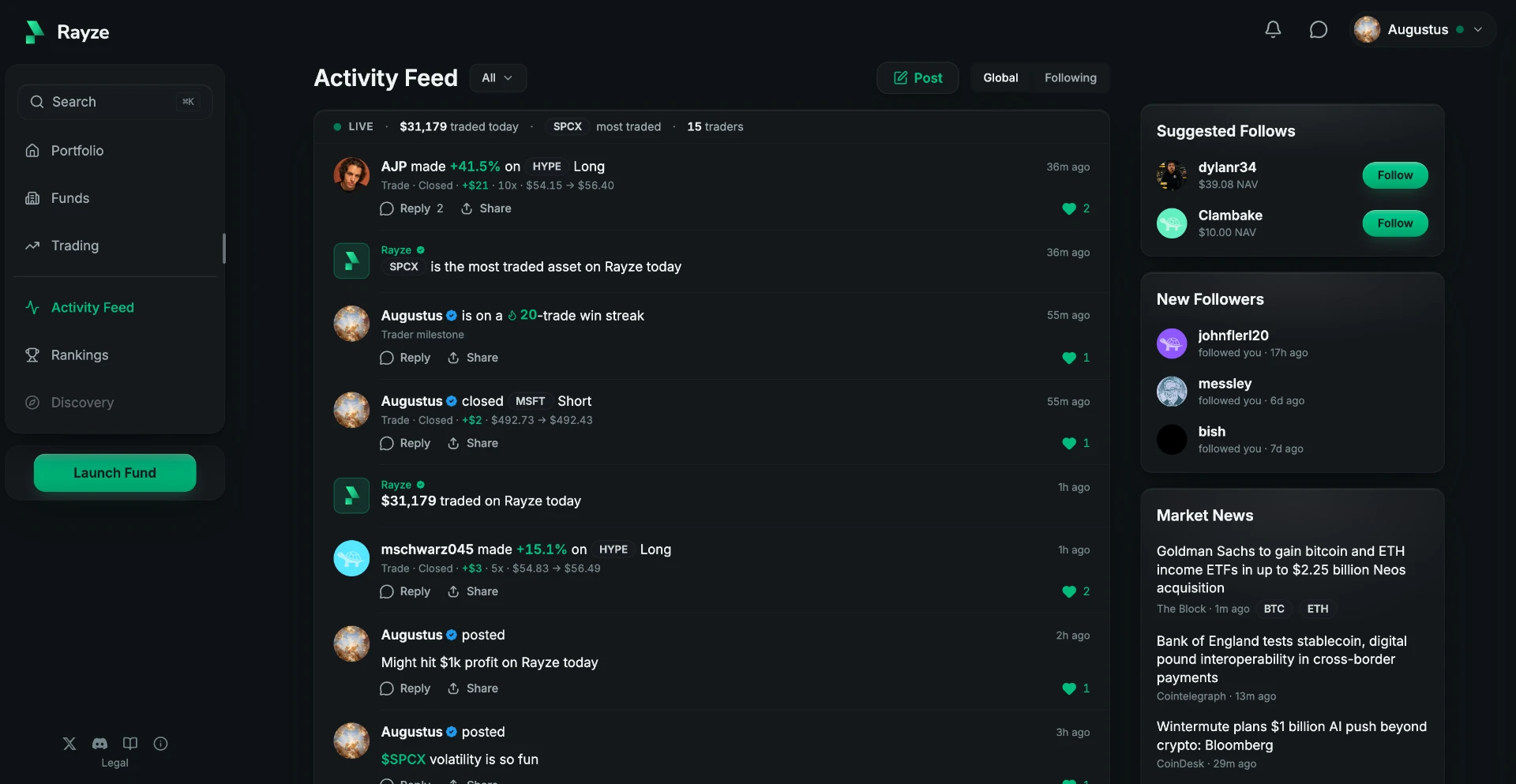
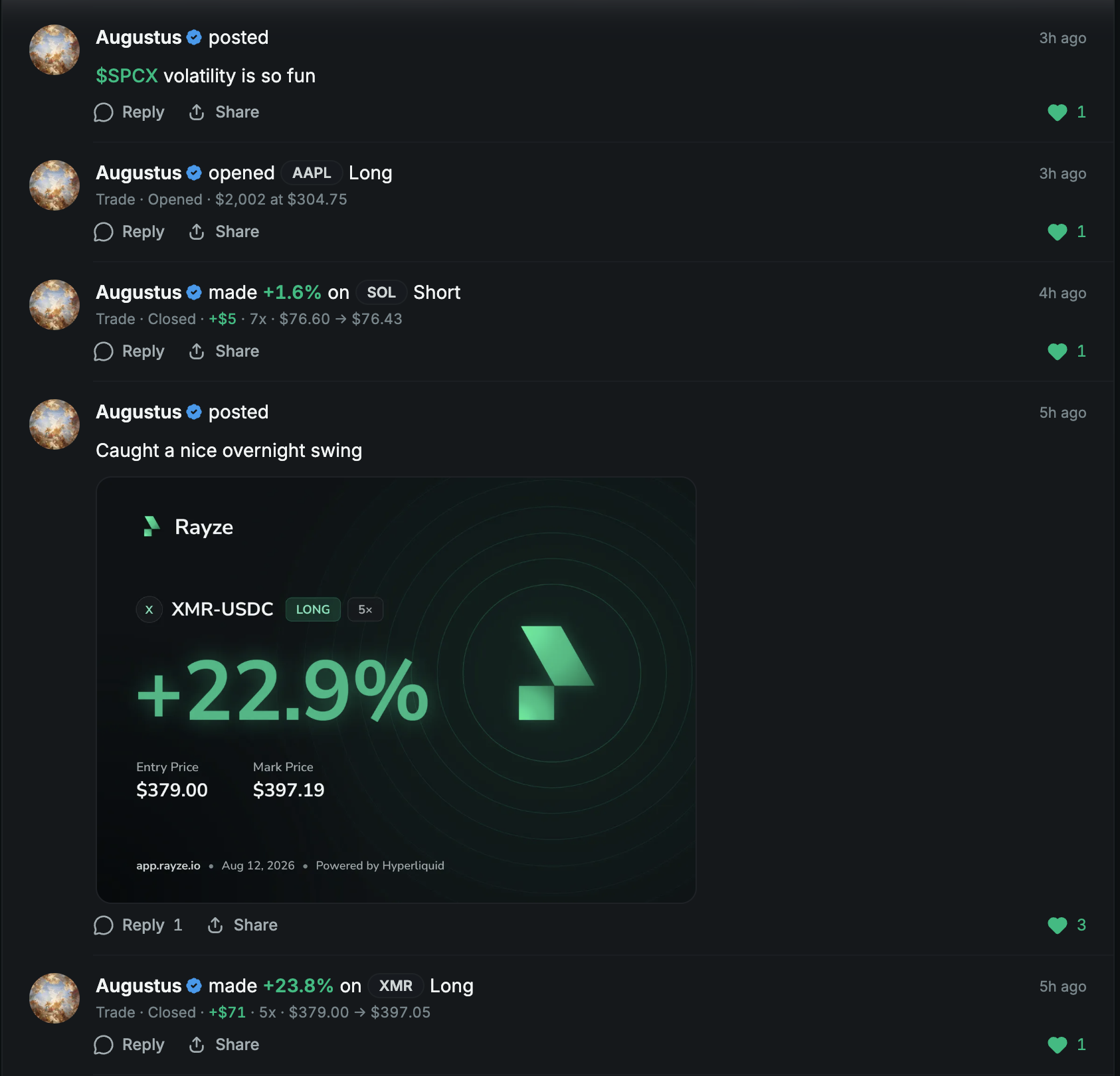
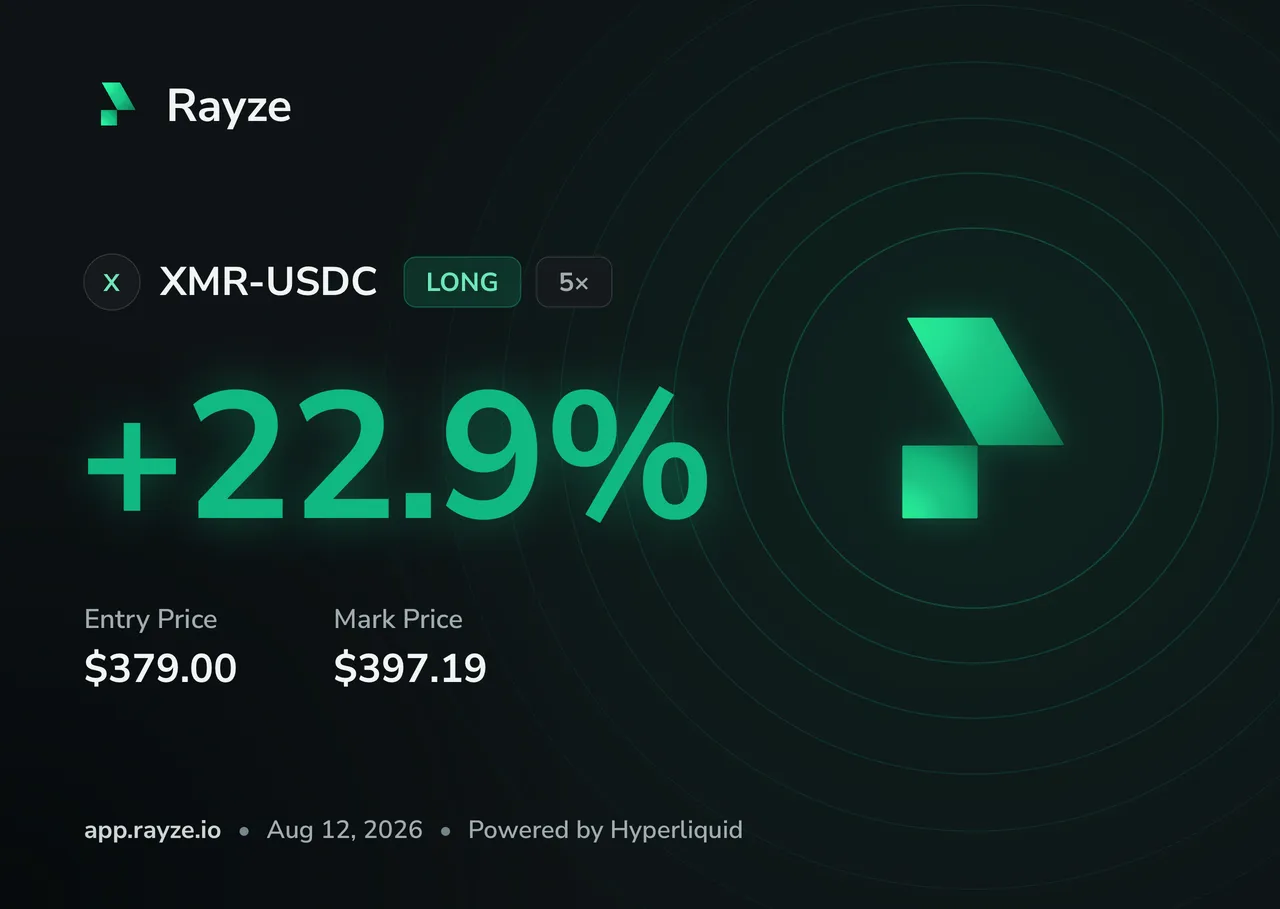
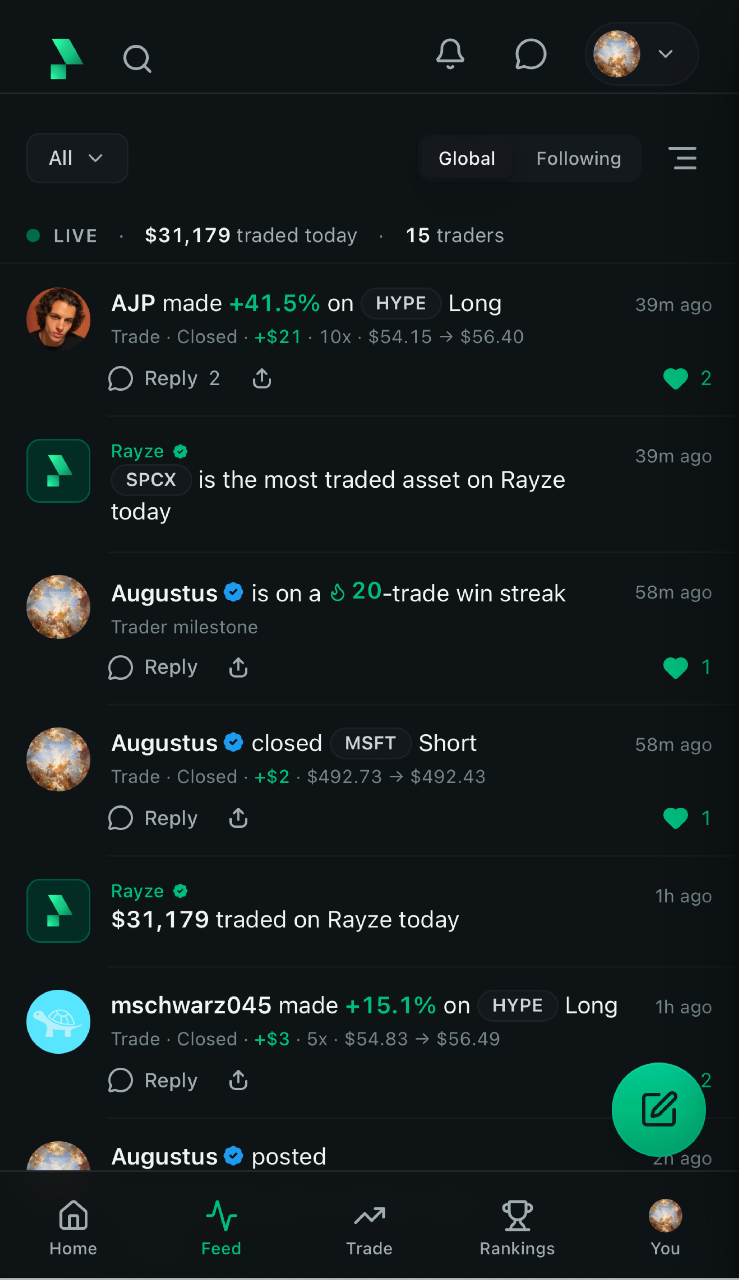
On Rayze, activity is reconstructed from what actually settled. When a trade closes, the card carries the ticker, the direction, the leverage the position ran, the entry and exit, the size, and the resulting return — because those values come from the trade itself, not from a caption someone wrote afterwards.
The same applies to everything else in the feed. Deposits and withdrawals appear because capital moved. A fund's creation, its growth milestones, and its swaps appear because those events happened on-chain. Milestone rewards appear only once a payout has actually settled — crossing a threshold and being paid for it are two separate events, and the feed distinguishes them.
The practical effect is that the feed is difficult to perform for. A trader who wants to look good in it has to actually trade well, publicly, including on the days it goes badly. Positions show up when they are opened, not only once they have worked out.
Following, filtering, and finding people worth watching
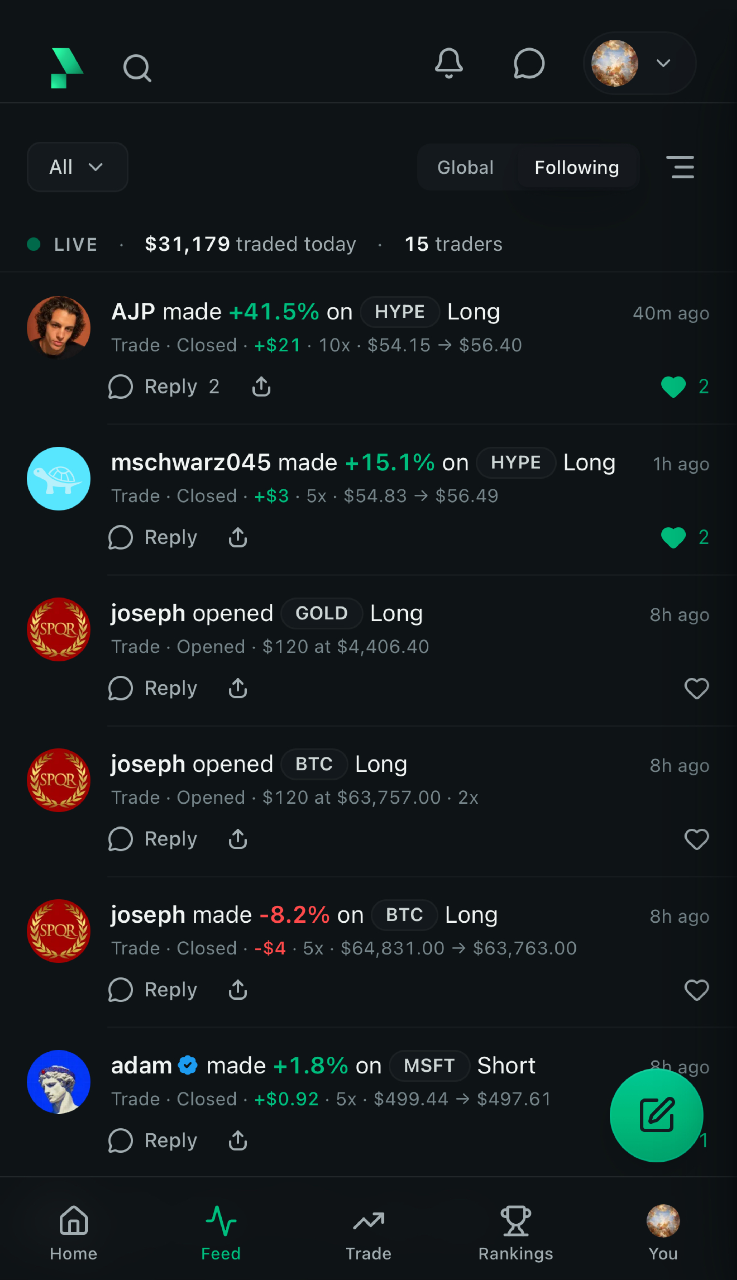
A feed of everything is noise. Rayze splits it two ways: by scope, so you can read the whole platform or only the people you follow, and by kind, so you can narrow to trades, to fund activity, or to posts.
Trades carry ticker tags, so an asset you care about is a way into the feed rather than something you scroll past. If you want to know who is actually trading a given market well right now, that is a filter rather than a research project.
There is also an ordinary social layer on top — posts, replies, mentions. The distinction that matters is that commentary and record are visibly separate. Someone's opinion about a trade sits next to the trade, and you can tell which is which.
Leaderboards that mean something
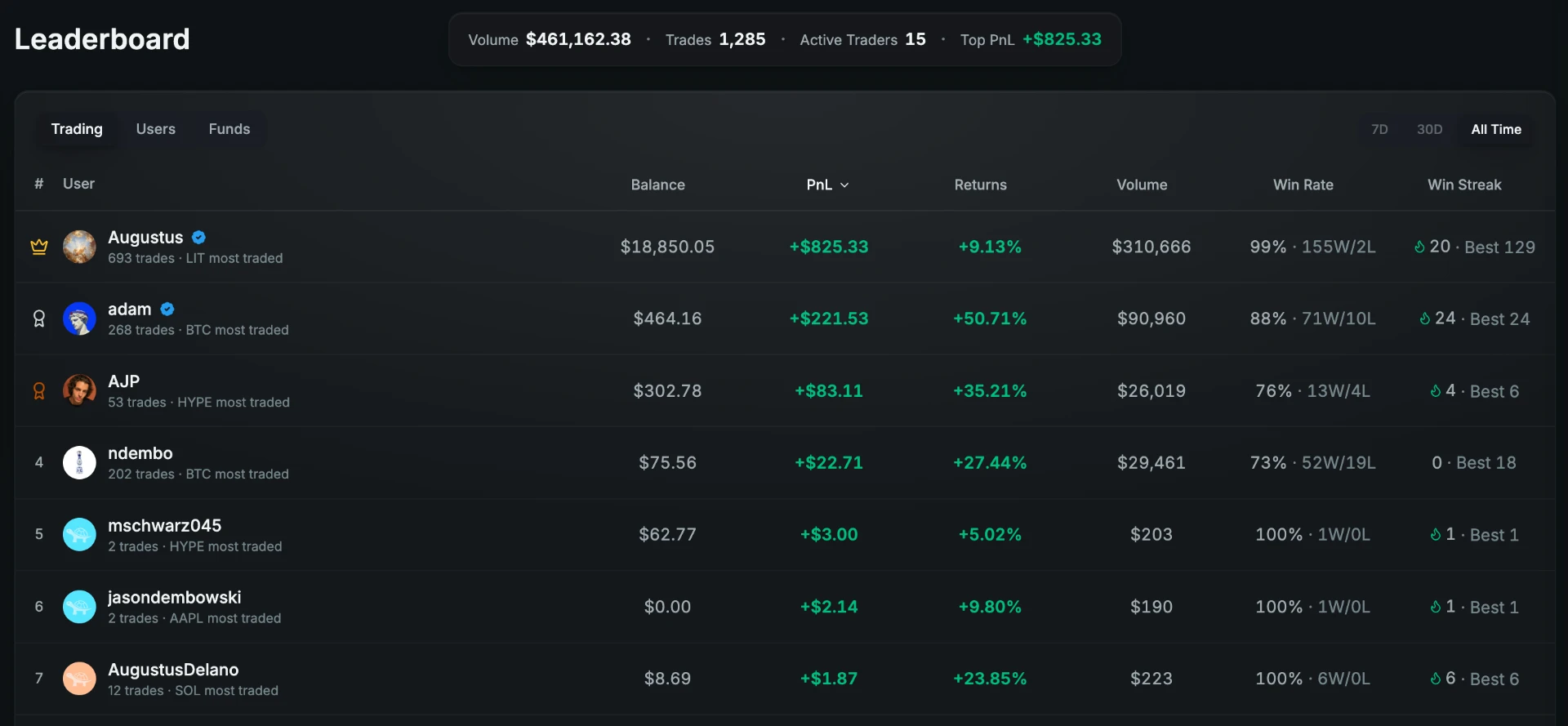
Once performance is derived rather than declared, ranking traders stops being an act of trust. The Rayze leaderboard orders operators by verified on-chain performance, which makes it a genuinely useful filter rather than a marketing surface.
It also changes what a track record is. Traditionally a track record is a claim a trader makes and a prospective investor tries to verify. On-chain, it is an accumulating public artifact that cannot be edited after the fact or quietly restarted when a quarter goes badly. Traders build it whether or not they intended to.
That cuts both ways, and it should. A permanent record is only an advantage to traders whose results hold up under inspection.
This is not copy trading
Watching a trader and copying a trader are different things, and Rayze does the first without doing the second. Copy trading mirrors someone's positions into your own account, which means you carry your own execution — your fill, your slippage, your position size relative to your balance. Two people copying the same trader can end up with different results.
On Rayze, if you want exposure to a trader's decisions you invest in their fund. They place one trade for the whole fund and you hold a share of it, so there is a single execution and returns are divided proportionally. The feed is how you decide who is worth backing; the fund is how you back them.
What transparency does not solve
A verified record tells you what someone has done. It does not tell you what they will do next, and it is worth being blunt about the difference.
A strong track record can be built in market conditions that do not repeat. A trader who has been right for six months can be wrong for the next six. High leverage produces impressive returns and impressive losses from the same strategy, and a feed that shows you the good weeks will show you the bad ones too — which is the point, but it means recent performance is a poor basis for a decision on its own.
Watching public activity also creates its own pressure. Following a trade you did not reason about, because someone with a good record took it, is not a strategy. The record is information; the decision is still yours.
The same feed on a phone
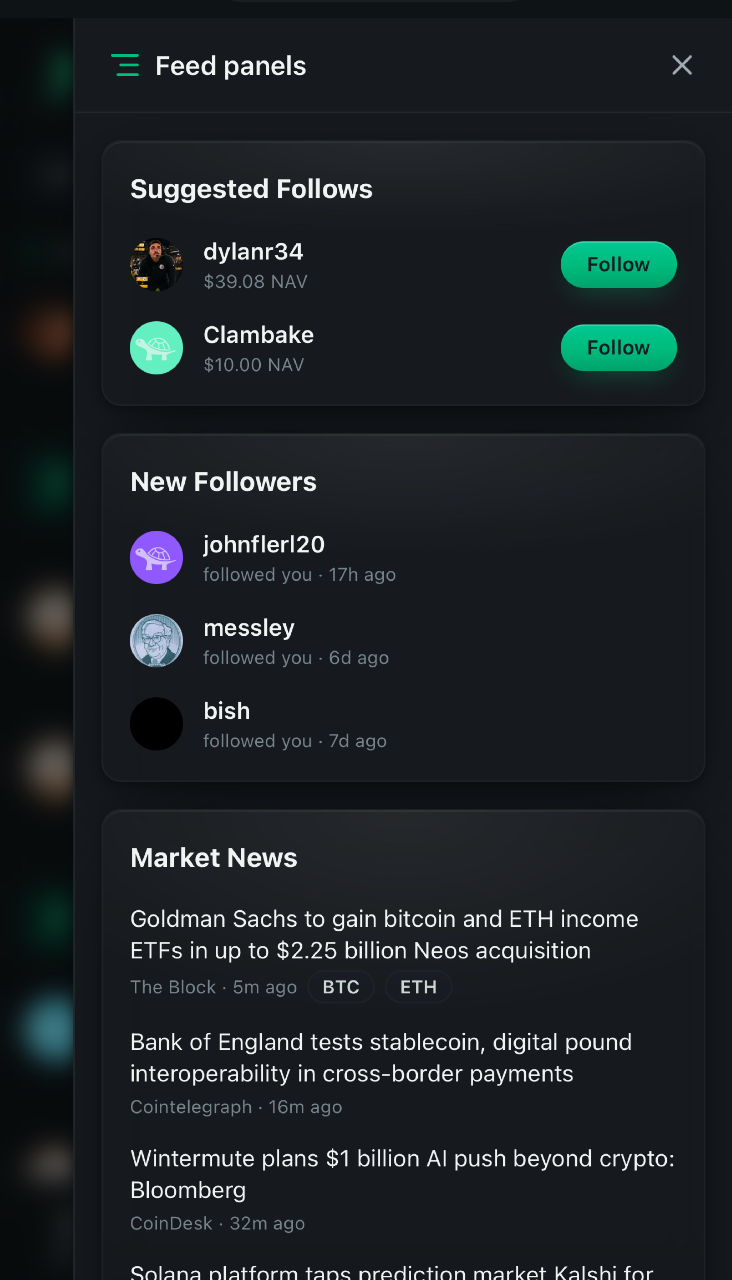
Everything above is available on mobile: the global feed, the same feed narrowed to the people you follow, and the panels that sit alongside it on desktop.
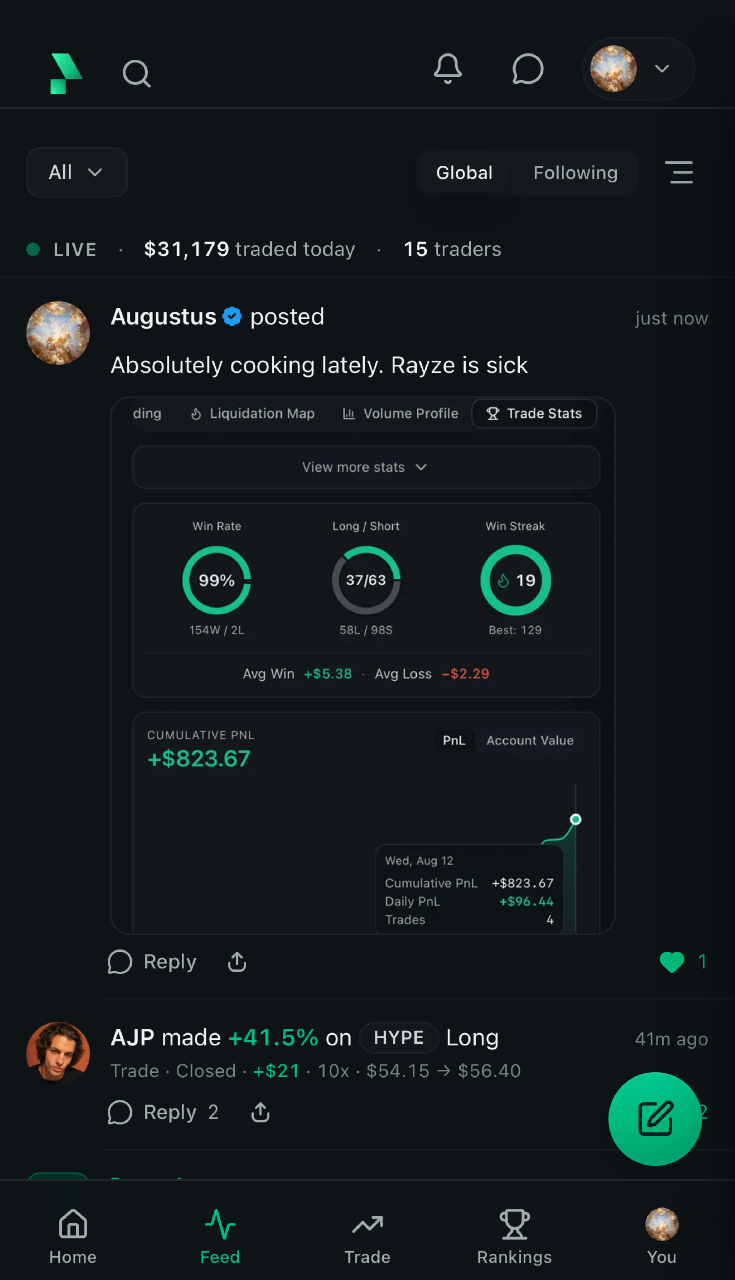
The filters carry over too. Scope and kind work the same way on a phone, and a post can still carry the trader's verified stats rather than a claim about them.
Frequently asked questions
- What is social trading?
- Social trading is any system that lets you observe what other traders are doing and use that information in your own decisions — through feeds, leaderboards, signal groups, or mirrored portfolios. The difference between implementations is mostly about verification: whether the performance you are shown is self-reported or independently derived.
- How is Rayze's activity feed different from a normal trading feed?
- It is derived from settled on-chain activity rather than composed by the person it describes. Trade cards carry the ticker, direction, leverage, entry and exit, size, and return because those values come from the trade itself. Fund events, deposits, withdrawals, and paid rewards appear for the same reason — because they happened, not because someone posted about them.
- Is social trading the same as copy trading?
- No. Copy trading mirrors another trader's positions into your own account, so you absorb your own execution, slippage, and sizing. Social trading more broadly just means being able to see what others are doing. On Rayze you can follow and study traders publicly, and if you want exposure to their decisions you invest in their fund rather than replicating their trades.
- Can traders hide their losing trades on Rayze?
- Positions appear when they are opened, not only once they have worked out, and the record is on-chain rather than editable after the fact. A trader can choose to go private, but they cannot keep a public record and curate it.
- How do I find good traders to follow?
- The leaderboard ranks operators by verified on-chain performance, and the feed can be filtered by scope — everyone or just the people you follow — and by kind, so you can look at trades specifically. Trades are tagged by ticker, so you can also work backwards from a market you care about.
- Does a verified track record mean a trader will keep performing?
- No. A verified record is a reliable account of what has already happened, which is a real improvement over self-reported numbers, but past performance does not predict future results. Strong records can be built in market conditions that do not repeat.
Keep reading
See the feed for yourself
Follow traders, watch positions as they are taken, and back the ones whose record holds up.
Rayze is a non-custodial technology provider — not a broker-dealer, investment adviser, or financial intermediary. Nothing on this page is financial, investment, tax, or legal advice. All investing involves risk, including loss of principal, and leverage increases that risk. Past performance does not predict future results. Users are solely responsible for their own investment decisions.